

Well, given the theme of this post, I wanted to work in a Willie Nelson song with the word “Road” in the title…

…but it felt too early to use “On the Road Again”, so I went with “Road Happy”.

Fooled ya!

“Road Happy” was a song that Willie co-wrote with Dolly Parton for the movie “Honeysuckle Rose”.
“But Ken… enough on Willie… the real question is, where’s Nico?”
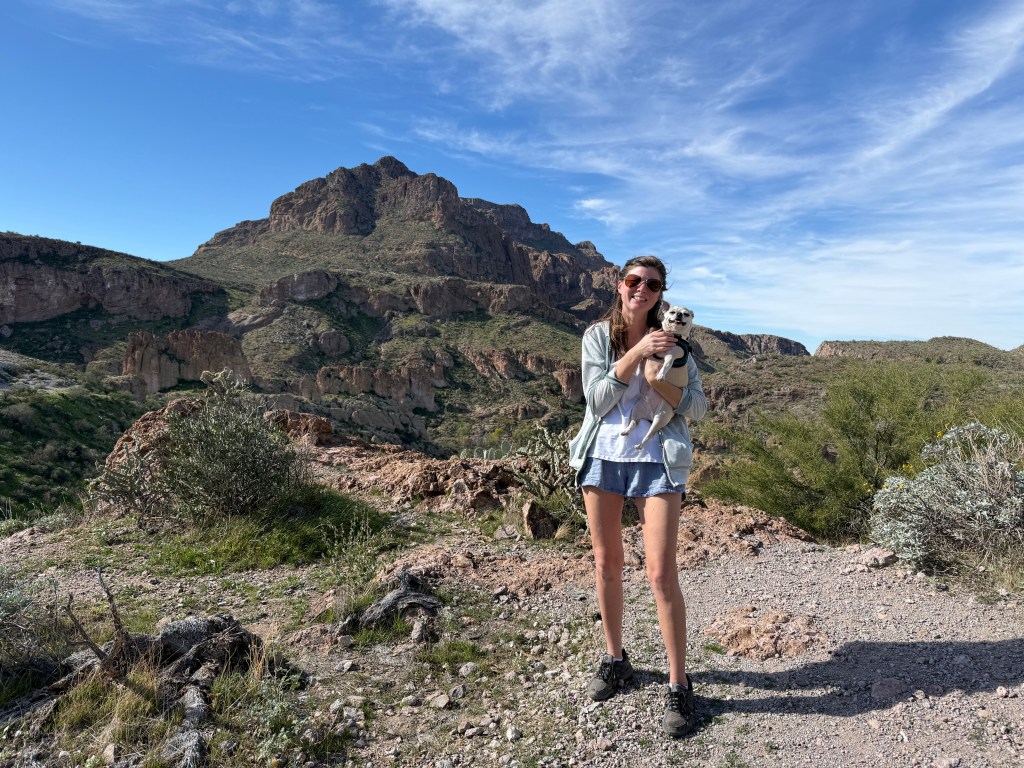
Tonto National Forest (still!)
Well, I just told you the other day he was at Tonto National Forest, and we’re still here! But maybe there’s another question we should deal with today, instead of “where’s Nico?”. And that question comes from an old friend, Kevin, who submitted the following:
A question for Nico…
As you were new to travel trailers and 3/4 ton pickup trucks, lessons learned of pulling a trailer and maintaining a truck and travel trailer on the road? For someone who has tentative plans of following in your footsteps in a year or two.
I appreciate the question, Kevin, and congrats on the upcoming retirement!

I must say, I think you asked the wrong dog that question, Nico views his role here as our Captain Kirk – he kind of sits at the helm and barks orders, but he doesn’t really have much of a grasp of the day-to-day details… he’s more of an “ideas dog”.

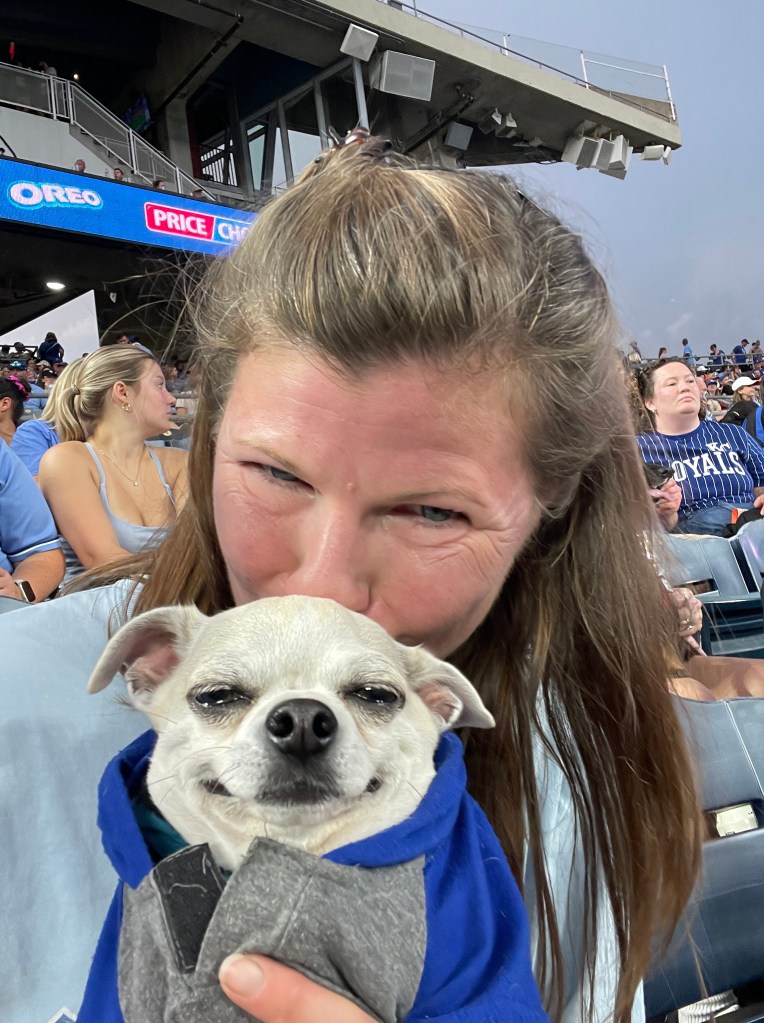
But Kristen and I would love to take a stab at answering your question. There’s obviously a lot to your question, and we’ll try to talk about what we think were big lessons learned and things we think are worth sharing, but if you or anyone else thinks of areas we missed, please put a comment below! And this is going to be a long post even by my standards – if you’re just here to see cute dog pics, I’ll leave you one more here and feel free to skip the rest.
I tried to break out your question into a bunch of separate categories.
Picking a Trailer
I think it’s worth giving a lot of thought to what you want and need as you’re picking a trailer. There are so many folks out there who don’t give this proper consideration and end up getting a different trailer after just a year or two. For that matter, there’s lots of folks out there who think this lifestyle is for them, buy a trailer and basically never use it.
One thing we did the year before we retired was we used a website called Outdoorsy to rent an RV for a week and take it down to New Mexico. That gave us a chance to get a taste of the life and to make sure Nico (as well as Kristen and I) were up for this lifestyle. (not to give away the ending, but it turns out we were!)
I’d recommend you do test out the life before going full bore into it – not everyone is going to be happy with some of the sacrifices involved in living your life in a couple hundred square feet. And even if you are, the test run will help you decide what is important for you as you pick out your trailer or RV.
One of the first decisions you need to make is whether you want to go with a truck and trailer setup or an RV (or even a bus). I will say, I definitely prefer having a truck and trailer. We drive to a lot of trailheads, and it would be a huge hassle to take your RV to all these trailheads (not to mention it’s a lot harder to find parking for a full RV at a trailhead as opposed to a truck). That week when we ran around in the rented RV, we drove it to Taos to do a hike up to Williams Lake:
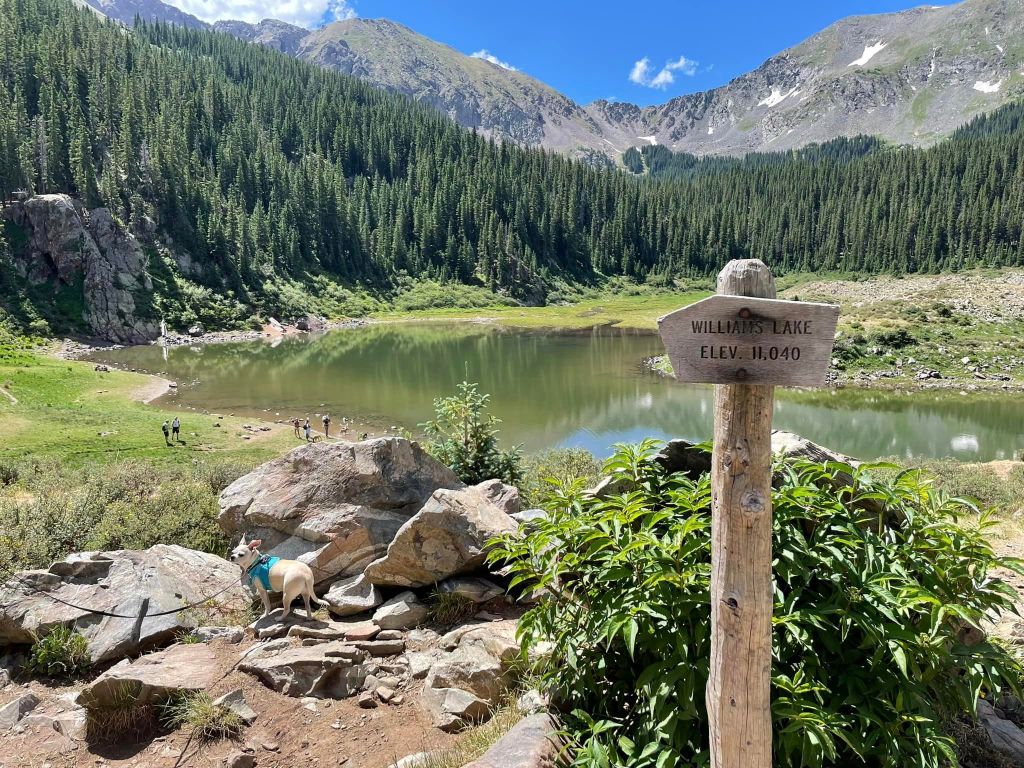
Beautiful trail, and I recommend the hike! But getting to the trailhead is pretty sketchy – I wouldn’t recommend driving up there without a four wheel drive truck. Somehow we did make it with the RV, and we lucked out to find a parking spot at the trailhead that was big enough to park the RV, but lesson learned there – it’s nice to be able to leave your trailer at your camping spot and still be able to drive a vehicle to your daily destinations. Also keep in mind that if you have engine problems, it’s nice to be able to just get the truck to the shop as opposed to taking your whole “home on wheels” (as my mom calls it) into the shop.
That said, some people tow cars behind their RV for just such a reason, or they bring bikes or eBikes with them to get to trailheads. The nice thing about an RV from our experience was that the passengers could move around a bit while you’re driving – they could go back and lay on the bed or whatever, as opposed to sitting in the truck during the whole drive. There’s safety factors that may make you uncomfortable with lying in an RV bed while it’s driving, as opposed to being buckled in and all, but it’s an option. But for us, a truck and trailer was a pretty easy call.
When it comes to buying a trailer, a lot of folks go to RV lots. If you think the stereotypical car salesman is shady, prepare to revisit your standards on shadiness when you meet an RV salesman. I mentioned a few paragraphs ago that there are plenty of folks out there who buy new trailers with intentions of seeing the world, and then leave the trailer in storage until they finally give up the dream and decide to sell it. If you go to Facebook Marketplace, you’ll find tons of them. That’s where we found our trailer – we bought it from some guy near Columbia, Missouri who had used it twice and kept it in heated storage during the winters. It was essentially a new trailer, and we got it for substantially less than a new trailer would cost (in late 2023, I think we paid $21,000 if I recall correctly for a 26 foot long 2020 Forest River Micro Lite).
There are all kinds of configurations for trailers, and obviously the condition varies greatly from one to the next. Know that trailers are made to be as light as possible and of course you’re driving them over highways and dirt roads, so they get jostled a lot – they live a rough life. You’ll definitely be spending a fair amount of time doing repairs and customizations – we view that as part of the fun, but I think this would be a tough go for folks who aren’t reasonably handy and willing to watch some YouTube videos to figure out how to do repairs.
As far as some factors to consider when choosing your trailer: Do you want an indoor shower? How stingy can you be with what you bring along with you, as space is at a premium? What kind of cooking are you planning on doing? Where are you planning on taking the trailer, as bigger trailers require bigger trucks and are harder to navigate on hairpin turns? Are you planning on doing a lot of “boondocking” or do you prefer to stay at fully supported campgrounds?
One example of a factor we weighed was whether we wanted a “Murphy bed”. A Murphy bed is a bed you fold into the wall during the day and fold down at night to sleep on. The plus of a Murphy bed of course is that frees up the space the bed takes for you to use during the day. We did not want this – we wanted a separate bedroom from the living room and didn’t want the hassle of putting the bed up each morning. Others may feel differently about that, which is fine – and that would let them get away with a smaller trailer. There’s no absolute right or wrong answer to this stuff – just right or wrong for you.
Also, some people make a big thing about fifth wheels vs travel trailers. A fifth wheel connects to your truck on a hitch in the middle of the truck bed, as opposed to a bumper hitch. It’s another decision to make – for us, we liked the ability to keep a lot of supplies in the truck bed, so we opted for the travel trailer.
One other thing to mention here when buying a trailer – like I said, these things are made to be light and get jostled all over the place, so you’ll want to inspect it very thoroughly before buying it. There are professional inspectors you can hire for a few hundred bucks to check the trailer out for you. We didn’t do that – instead we watched videos like this one to learn what we needed to inspect, ourselves. Like I mentioned before, if you’re not good with watching videos to learn about this stuff and aren’t interested in doing repairs and mods yourself, I don’t know that this is the life for you.
Picking a Truck
Different trucks have different tow capacity and tongue weight. This is really important! I’m not going to get into too much detail as there’s plenty of sites like this that discuss the calculations. You’ll see a lot of trailers, including the one we bought, that will advertise that you can can get by with a half ton truck. But when we factored in the weight not only of the trailer but also all the gear we were taking with us (and Kristen literally put everything that went into the trailer on a scale, so we’d know where we were at in terms of weight), that was a stretch. We certainly didn’t feel comfortable with that, and are glad we went with a three quarter ton truck instead. Even with a three quarter ton truck, I’ve experienced a couple of moments that made me feel queasy when we got passed by semis on the road with a good cross wind (side note – regardless of semis on the road, I recommend not driving in strong crosswinds!). I can’t imagine doing this with a half ton. If you find your needs are smaller than ours, and you can get by with a smaller trailer, then without a doubt, there are plenty of trailers where a half ton truck would do fine. Obviously half ton trucks do much better with gas mileage and are cheaper to buy.
Speaking of gas mileage – boy was I in for a surprise! I’m used to driving a 2004 Toyota Prius! We expect probably 8-10 miles per gallon when towing the trailer and upper teens when driving without the trailer. As a guy who had a bit of a lead foot in his younger days, I’ve learned to drive a few miles below the speed limit as much as possible because it really improves the gas mileage. Plus, I’m an old retired coot, so why should I be in a hurry to get anywhere?

We opted for a 2019 Chevy Silverado 2500 work truck. We went with the work truck because it lacks a lot of the bells and whistles but has all the core functionality – so it’s a bit cheaper than other trucks. Our truck had 34,000 miles on it when we bought it in early 2024, and I think we paid a little over twenty grand for it. It’s been fantastic for us – we’re now at about 75k on the odometer and haven’t had any issues at all, aside from replacing the tires. Like with the trailer, we found the truck from a private seller in Excelsior Springs, Missouri on Facebook Marketplace.
Solar power
If you’re planning on staying at campgrounds that have electric, water and sewage hookups, then this probably won’t be relevant to you. One of the amazing opportunities with this lifestyle is we can stay on government BLM land throughout the western half of the country for free. Free is a tough price to beat. Of course, there’s still a cost to that abundant freeness: there’s nothing to plug into in the desert. And electricity is a pretty nice thing to have in your life, as long as it’s not coursing through your body at extreme voltage.

To address our energy addiction, we turned to another freebie – sunlight. I actually posted about our solar setup once before, but honestly, it wasn’t that hard. In addition to the beautiful Sam Elliott, I’ve developed another mancrush – RV With Tito. He has a video that I worked closely off of to mount solar panels on our trailer roof. Meanwhile, my gorgeous electrical engineer travel partner Kristen built out a power center that we mounted behind the kitchen sink for the inverters, batteries and the like. We went with Victron Connect equipment for the power center, and it’s been great for us. It’s all super easy to monitor from an app on your phone.
We bought the stuff in the power center new, but for the solar panels themselves, we again turned to Facebook Marketplace to get our initial set. Last year, we were in Arizona and solar panels are virtually free down there – they’re awash in them. We actually ended up upgrading the panels because we could do it for so cheap. A lot of these types of mods are easier to do at home, but we did upgrade the panels on the road and it wasn’t too bad. I actually talked about that upgrade before, in this post.
As you’re planning out your solar configuration, it’s kind of hard to know just how much power you need. Luckily it’s pretty easy and not too pricey to upgrade components. We got by very well on our initial configuration for our trip in 2024, but were surprised in early 2025 when we headed out for our first trip of the year to find that we ended up having to charge separately because we weren’t getting enough of a charge during the day. The cause was simply that in the winter, the sun’s arc is a bit lower than in the summer, so less rays came our way. We could have installed something on the roof to just change the angle of the panels to get more current, but in the end, it was just as cheap to buy the higher powered panels we installed at that time.
Internet
So at present, there’s really only one viable, reliable satellite internet provider, and that’s Starlink. Amazon and others are working on building out other networks that should be available in the next few years. Starlink’s service is okay. It’s improved a fair amount in the two years we’ve been using it now. It takes less than five minutes to power up and get you connected when you turn the router on, and speeds seem fine for our needs (web surfing, watching a movie, etc.). It’s an expensive service – the router was around $500 or so to buy up front, as I recall, and the internet plan for people who roam (don’t have a fixed address) is $165 per month. You can cancel the plan any time you want and reactivate it again with no activation fee – but they do go by full months, so if you’re just going on a long weekend trip or something, you’ll find yourself on the hook for the whole month’s worth of access if you use it.
It is extremely useful to have internet access on these trips. We’re very often outside of any cell service.
Good online resources
There’s no shortage of great places to research your trip and great apps to help you out. My single favorite app is AllTrails. You can use it for free, but if you like to hike, I’d strongly recommend signing up for the ‘Plus’ plan, which costs $36 per year (sometimes they do promos or sales). AllTrails helps you find great hikes in your area, and with the Plus membership, it’ll help you stay on the trail even if you don’t have cell service. It’s really a great app.
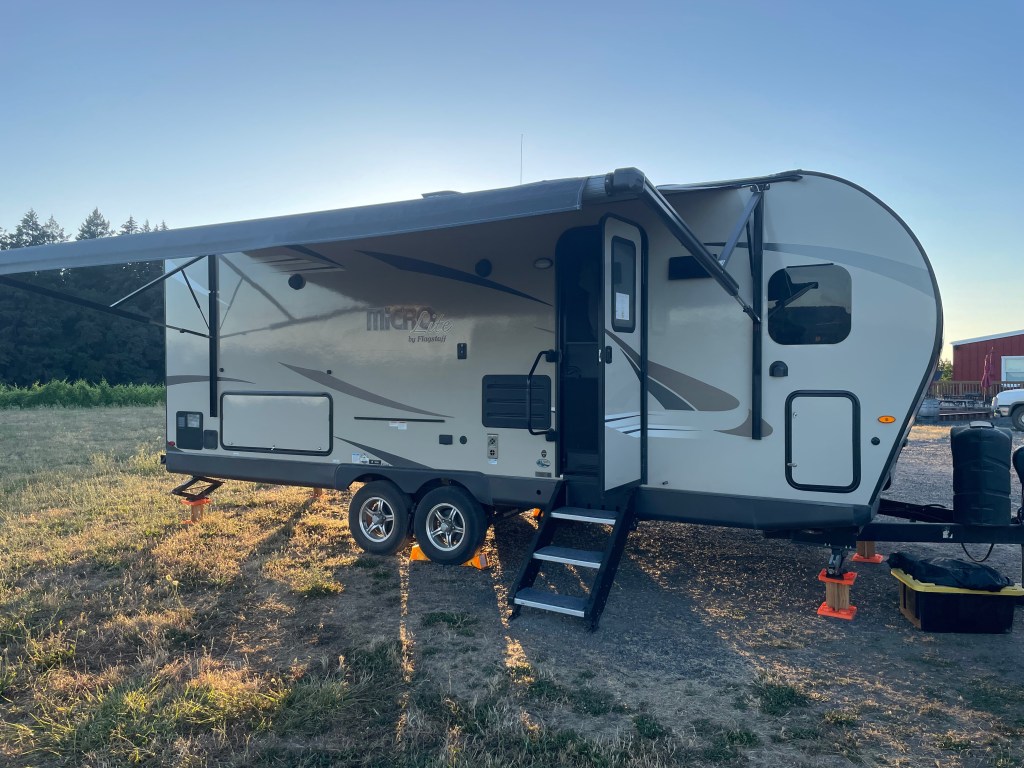
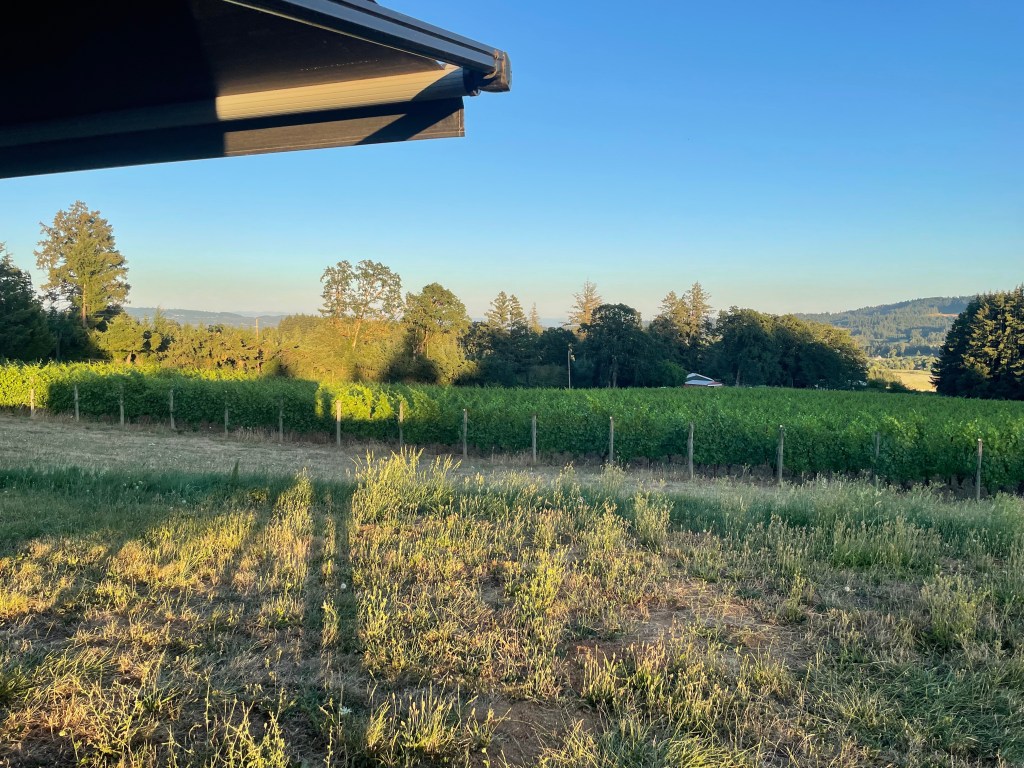
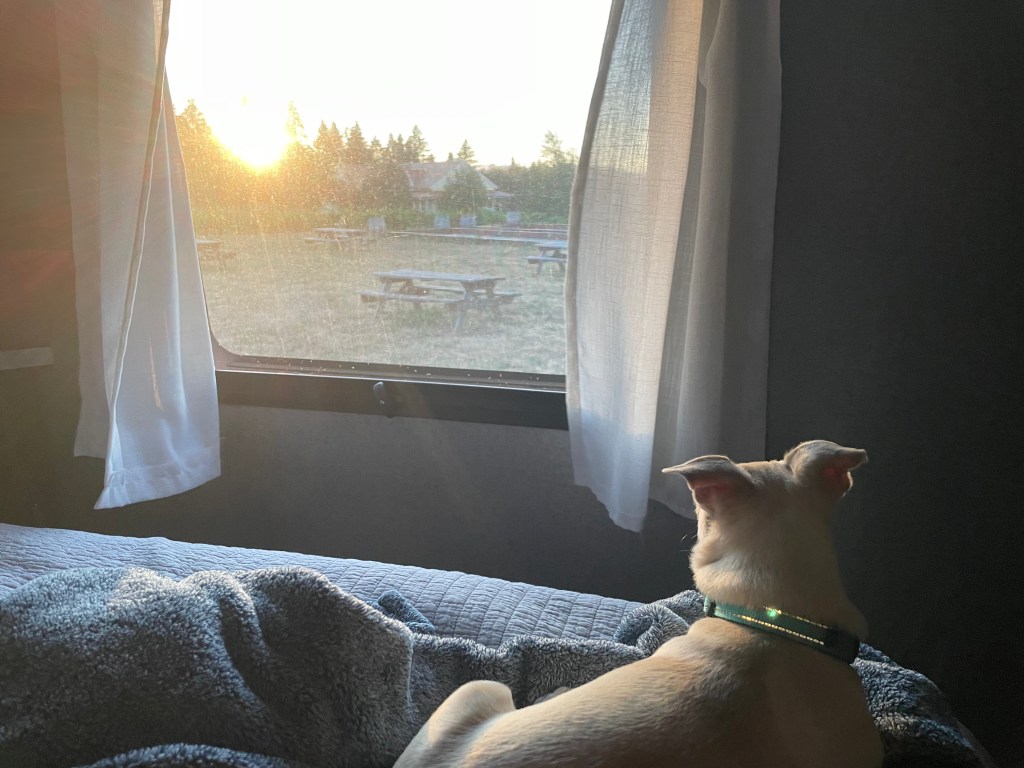
We’ve also used an app called Harvest Hosts. Harvest Hosts offers you thousands of places you can stay the night for free, with the expectation that you’ll buy a small amount of goods or services from your host. The hosts are quite varied – a lot of wineries, breweries, farms, museums, and the like. It costs $100 per year, and they often offer discounts on the membership. We have used this service for situations where we’re doing a multi-day drive as a way to find some good spots to overnight during the haul. We haven’t used this a ton, but we’ve had some nice experiences when we did use it. Probably my favorite host we’ve used so far was Utopia Winery in Oregon:
Google Maps is obviously extremely useful, and I’m sure you’re already aware of it. I did want to mention that you can download “offline maps” in Google Maps. It’s very useful when you’re out in the boonies. When we get parked at a new home for the next few weeks, one of the first things we try to remember to do is pull down offline maps for our area. When you’re driving to trailheads or to go get supplies, you’ll often find yourself without cell service, and having the map still accessible on your device is very helpful!
I already mentioned the Victron Connect app when I talked about solar, but it’s a slick one as well.
One last app I wanted to mention is iOverlander 2. They have a couple different tiers to choose from, but cost under $100 for the year. We personally use the ‘Pro’ tier which runs $60 per year. iOverlander 2 is a great source for finding places to boondock, to get water, to get propane, to dump your black tanks, etc. Kristen and I divide the labor for these trips, and one of the jobs she handles is navigation. This app is indispensable for her.
Water
One thing we do virtually every day we spend on the road is sourcing water. We use more water than many other folks who live this lifestyle – plenty of folks out there use “dry shampoo” and other things like that to minimize their water needs. We aren’t that extreme. The three of us typically go through about fifteen gallons of water per day. So we keep three five gallon collapsible jugs with us. Every day, before or after our hike, we’ll swing by the closest water spot we find on iOverlander and fill the jugs. In-line water filters are worth the not-too-bad cost. We toss them in the back of the truck, and when we get back to our campsite, we use a portable water pump to siphon the water from the jugs and run them into our trailer’s fresh water tank. We tried a couple of different methods to siphon the water (gravity, a pump that was attached to a cordless drill, etc.) and this was by far the easiest solution for us.
While we use more water than many others living like this, we still try to be pretty frugal with it. For example, we take “military showers”, where you turn on the water to wet your body, shut it off while you soap and shampoo, and turn it back on to rinse off. It’s not a big deal, but I will say, when I get home and take a regular shower and just let the water splash off my back and soak it all in, it feels pretty darn luxurious!

Of course, you’re also not just dealing with clean water on these trips. Your waste ends up in either grey or black tanks. We have two greys – one for our kitchen sink and one for the bathroom sink and shower, and the black is for the toilet. There are sensors (notoriously unreliable) that give you a sense of how full those tanks are. What we have found is we can make it two or three weeks on the black tank, but only three or four days on the grey tank for the shower. We bought a macerator pump to pull the water from the tank into a bladder, so we can take it somewhere to dispose of. We have two large water bladders – one blue and one black. We use the black one to take the waste water, and the blue as a holder for fresh water (in addition to the five gallon holders I mentioned earlier). We have separate hoses for clean water and for waste – that may sound obvious, but it’s something to prep for as you’re planning out your trip.
Life in a trailer
I really love the lifestyle we have while we’re on the road. Our typical day starts as we wake to the morning sunlight streaming in through the windows. We lay in bed for a while, giving Nico the attention he so richly deserves in his mind, reading any emails from the night before, and doing a couple of New York Times crosswords. Then we’ll pack up some sandwiches and fill the water bladder in my backpack, and head out for our hike for the day. The hike is typically the highlight, although I love all the aspects of the day out here. When we get back, we’ll make ourselves a martini, get the Royals game on the stereo to listen to, and do some dinner prep. We usually watch a movie or something after dinner, and often make some cookies or a bowl of fresh fruit or something else to enjoy for a dessert to enjoy while we watch the movie.
We also call my mom every afternoon or early evening. Before we started this lifestyle, I’d usually call mom once a week, but it’s really fun to catch up with her every day, and also, it’s good to let someone know where we are. If something were to happen to us while we were out here, Mom would know what area we’re in and could send for help if needed. It’s a nice habit, and regardless of who you pick, I’d recommend that you regularly check in with someone while you’re on the road.

We do set aside one day each week for “errand day”. On errand day, we run out to the closest town to find a laundromat, get groceries, gas up the truck, refill propane tanks if needed, etc. It’s also the one day of the week we often eat out for lunch, somewhere where there’s a dog-friendly outdoor patio.

Route planning
I mentioned above that in the division of labor for us, Kristen does most of our route planning. There’s a ton of ways you can approach this life on the road, but we like to keep things pretty loose and free. Each trip, we have some general thoughts about areas we’d like to see and things we’d like to do, but it’s nice to keep things where you can call a lot of audibles.
For our current trip, we’re thinking that it’d be fun to explore the Baja peninsula, we’d like to take Nico to a Royals spring training game, and we’d like to meet up with Kristen’s mom in Yuma and see family and friends in southern California.
We may or may not do all of that – last fall, we thought we’d be going to western Canada and possibly even Alaska, and we never made it that far. And that’s fine – we have plenty of trips ahead of us still, and we’ll get all this stuff in eventually, but if we’re having a ton of fun on the coast of Washington state or whatever, then we’ll stay and enjoy that. If we’re tired of an area, we’ll pack up and mosey on down the road.

As I said earlier, the government lets you stay in all kinds of cool places for free. They do ask that you don’t stay in any one spot for more than two weeks. That seems like a fair ask, and we honor it – we typically stay at spots we enjoy for the full two weeks and then move on. Like I said, gas mileage is terrible when you’re hauling your life around on the highways, so we try to stay in a spot for a while and really enjoy it rather than stay constantly on the move.
One of the big factors for us is, unsurprisingly, Nico! Most national parks in the U.S. don’t let you take dogs on the trails, but virtually all national forests do. And Nico loves to hike, but he struggles when the temperatures get too high, so we try to stay in climates where he’ll be comfortable. We love Utah – it’s an amazing state – but there’s no way Nico can hike around in the summer heat in Canyonlands. So we try to plan things out so that we hit areas when the temps will be a range that he can deal with okay.
How do you drive this thing?
We actually bought our trailer before we owned a truck and without any experience at all at hauling a trailer. I drove it home and didn’t know how in the heck to back it into our driveway in the dark and in the rain. Luckily we have an amazing neighbor who bailed me out that night. Here’s a post about that experience. At this point, I’m very comfortable with the whole process. When we get to a campsite, Kristen hops out of the truck and spots me. If we have cell service in the area, she calls me so we can be talking as I’m settling into position. If we don’t have cell service, we have a pair of walkie talkies that we use. She navigates me as I back into the area.
If you’re doing this by yourself, they do make cameras that you can mount to the back of the trailer so you can view that from inside the truck. We had one the first year we did this, but ended up selling it because we simply didn’t use it or need it. But if you’re by yourself, something like that would probably be very useful.
I mentioned this earlier in the post, but one thing that is a bit nerve wracking is wind. It’s a very strange feeling when a semi truck passes you during a strong cross wind – the wind almost pulls you towards the semi, which is just creepy, frankly. You get used to it pretty quickly, but be ready for that feeling when you first start driving.
Having Kristen handling the navigation is really comforting for me as I’m driving. It’s nice to have someone who can be checking ahead for a good gas station ninety miles down the road or a good spot to get some lunch. Newer trucks often give you an estimate of how many miles you have left on your tank of gas – don’t trust that. When you’re hauling a trailer sometimes, and just driving the truck to trailheads at other times, the truck can be substantially off when it guesses how many more miles it can go on the tank.
Your home
It is strange to leave your house for multiple months. It’s not like when you’re just heading out for a week trip to see family. We’ve had people stay at our house a couple of times, and we’ve left the house empty at other times. When leaving it empty, we’ve taken a couple of different steps.
You need to figure out what to do with the mail – we’ve used a service where we forwarded all our mail to them, and they’d send us scans of what we received. If we wanted anything opened, they would open it and scan it for us. They’ll discard what you don’t want, and they’ll ship things to another address (or your home address) if you want them.
A lot of people may not realize this, but you can get a daily email from the postal service for free that has a scan of the outside of all the mail coming your way that day. They call the service Informed Delivery.
At this point, we don’t use those services anymore as we’ve gotten our junk mail down to a minimum. You can find plenty of resources on the interwebs that will help reduce the junk mail you receive. I make a point of reaching out to a lot of the folks who send us mail to ask them to stop sending letters to us. It’s not necessarily junk mail – for example, we are former season ticket holders for a local theater, and they sent us mail all the time. I called them to ask them to keep me on their email list but to stop the paper, and they did. I’ve got all our banks and utilities sending us our bills and statements electronically. I bought a large mailbox with a drop bin that should be plenty big to hold several months worth of letters, without it being obvious that no one is residing there. If there’s a letter we actually care about, we can see the outside of it from the USPS email, and we can ask a friend back in Kansas City to swing by our house to open the letter and email us a scan of the insides.
We also bought a bunch of Blink cameras to monitor the inside and outside of the house, along with water sensors near the sump pumps in the basement and temperature sensors in the fridge. We have systems that water and provide UV light for our plants. I also bought this thing I love called an Oto to water our front yard while we’re gone. There are also automated mowers you can get, but we found a retired gentleman in our neighborhood who we hire to come mow the lawn while we’re out of town. We also have an August smart lock for our front door – it not only lets you know when doors have been opened and closed, but you can unlock your door remotely or give other people temporary or permanent access to the door. It’s very handy while you’re on the road. We also have a Nest thermostat so that we can set the house temps remotely, and we have a bunch of lights on smart switches so we can make sure it sort of looks like someone lives in the house, even when it’s empty.
Supplies to bring
I’m not going to even try to list out everything we bring with us, but I will say, if you’re planning on doing this frequently, it’s worth creating your own list so you minimize how many things you forget. We love to cook, and a lot of what we bring are things to support that. One item that we bought last year and have come to truly love is a Gozney Roccbox pizza oven. It’s kind of pricey – they list for $500 but often go on sale for $400 and you can often find them on Facebook Marketplace for $250 or $300 or so. But we use it for a lot more than pizzas – we sear steaks and seafood on a cast iron plate we put inside the oven, and it can be used for all kinds of things. That can be really nice in the summer months, when you don’t want to fire up the stove inside your already warm trailer.
I mentioned the water pump earlier – that’s done a lot to make our lives easier out here. We have a tire pressure monitoring system for the trailer – they’re cheap and well worth it. We had a trailer tire blow on I-40 last year, and I’m so glad that we got notified immediately about it, as you couldn’t really feel it as you were driving the truck.
The first year, we brought a tent and sleeping bags and air mattresses for all the people who said they were going to come visit us while we were out there. Turns out, they didn’t come! We’ve left that stuff at home ever since. Not that we wouldn’t love folks to visit, but when we’re sweating every pound we bring along with us, if you want to come along for a bit, you’re going to need to bring your own accommodations.
I feel like I’ve rambled on longer than I probably should have, but I also feel like I’ve probably missed a thousand things that are relevant for anyone looking at this lifestyle. If you have any questions, please add them to the comments or send me a direct message.
Thanks!
Ken 2026-01-14


 Where’s Nico?
Leave a comment